Sun spots & melasma · Shimbashi & Ginza
Brown patches on a man’s face build up quietly — from years of ultraviolet exposure with no sunscreen habit, from shaving the same skin every morning, and from skincare that never quite happens. Laser is aimed at a spot you can point to. Melasma is a different kind of pigmentation, and is approached with medication instead.
Laser removal of a pigmented spot starts at ¥3,500 at Shinbashi Ginza Swift Clinic in Shimbashi, Tokyo. A spot up to 1cm across is ¥3,500 and a spot up to 2cm is ¥5,000. An unlimited plan, which covers spots up to 1cm, is ¥15,000. Melasma is a different type of pigmentation and is not what this laser is for — it is approached with tranexamic acid tablets at ¥2,400 a month, or a hydroquinone cream at ¥2,980. Treatment at a first visit is possible, and because this is self-pay there is no first-visit consultation fee.
| Treated area | Price |
|---|---|
| Spot up to 1cm across | ¥3,500 |
| Spot up to 2cm across | ¥5,000 |
| Unlimited plan — spots up to 1cm only | ¥15,000 |
Prices are per spot, except the unlimited plan. The plan applies to spots up to 1cm across; a larger spot is charged at the ¥5,000 rate. How many spots are worth treating, and whether they are the kind that respond to laser at all, is decided at the consultation once the doctor has looked at them. See the full price list for everything else we do.
There is no ongoing course to commit to. Treatment is usually finished in a single visit, and because this is self-pay treatment there is no first-visit consultation fee.
Three things account for most of it, and none of them feel like a risk at the time.
The first is ultraviolet light without much defence against it — walking to the station, sitting by a window, a round of golf, year after year, while sunscreen stays something other people use. The second is shaving. Dragging a blade over the same skin every morning is a daily irritation, and skin that is repeatedly irritated produces more pigment. The third is what does not happen afterwards: no moisturiser, no aftercare, so the barrier stays dry and slow to recover.

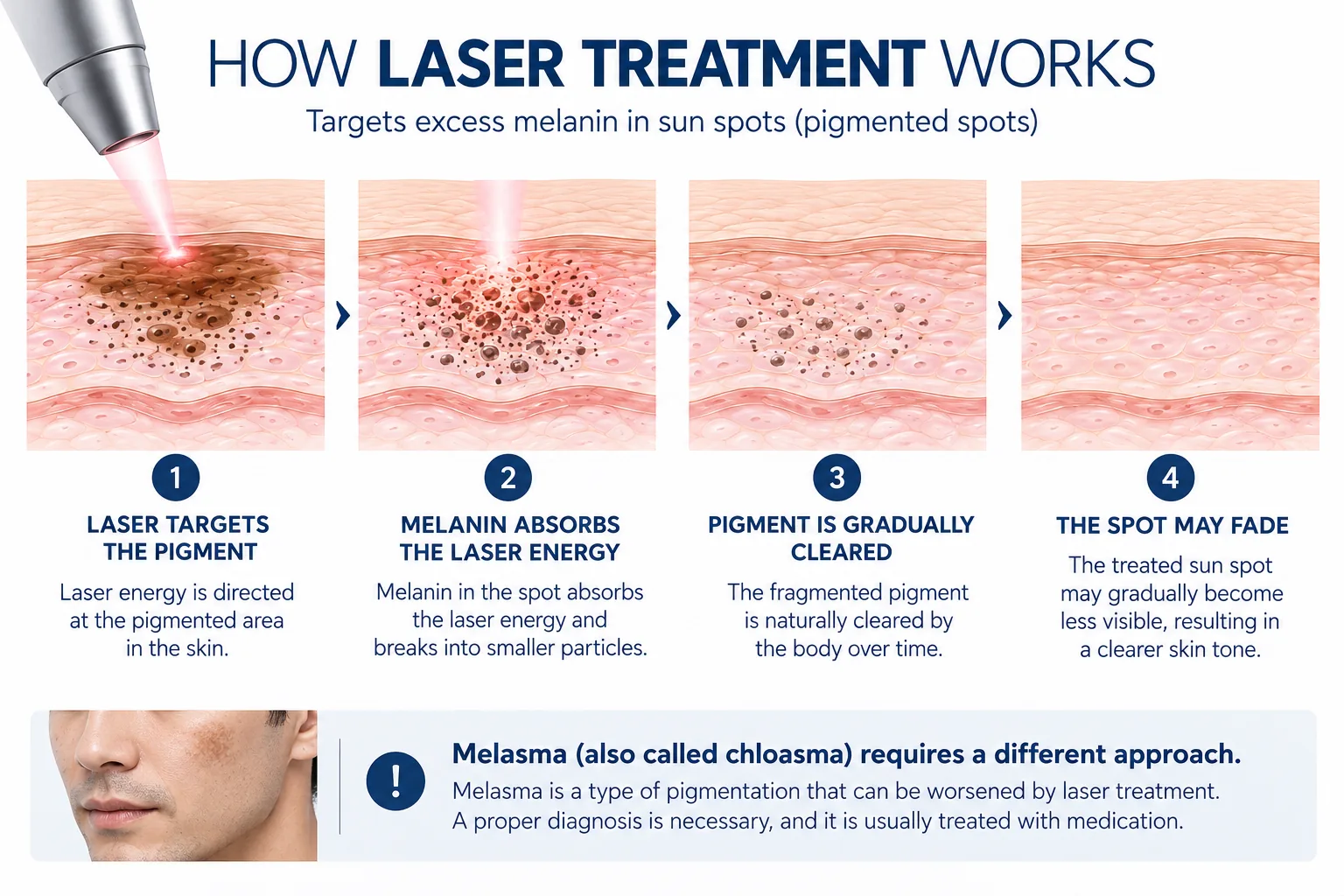
The laser is aimed at the spot itself. It breaks down the pigment that has accumulated there, so the area can move back towards the skin’s own colour. There is more than one kind of pigmented spot, and the approach is matched to the kind you have; where it is a good match, it can improve the tone of the area and make the spot less likely to return. How much changes, and how fast, varies between people.
Three practical reasons it gets chosen over the alternatives. You can have a single spot treated — one you point to in the mirror — rather than committing to treating your whole face. It is finished in one visit, where a tablet-based approach takes months. And the price is stated per spot, with nothing to keep paying for month after month.
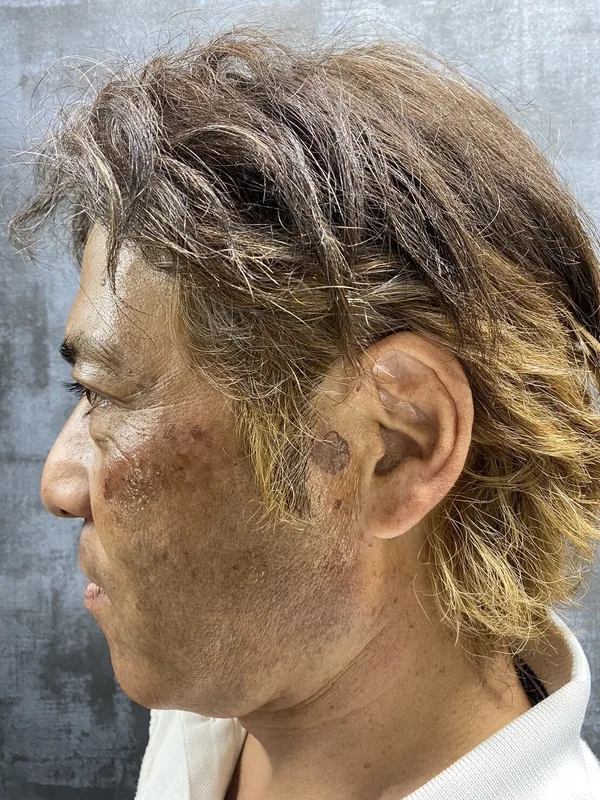
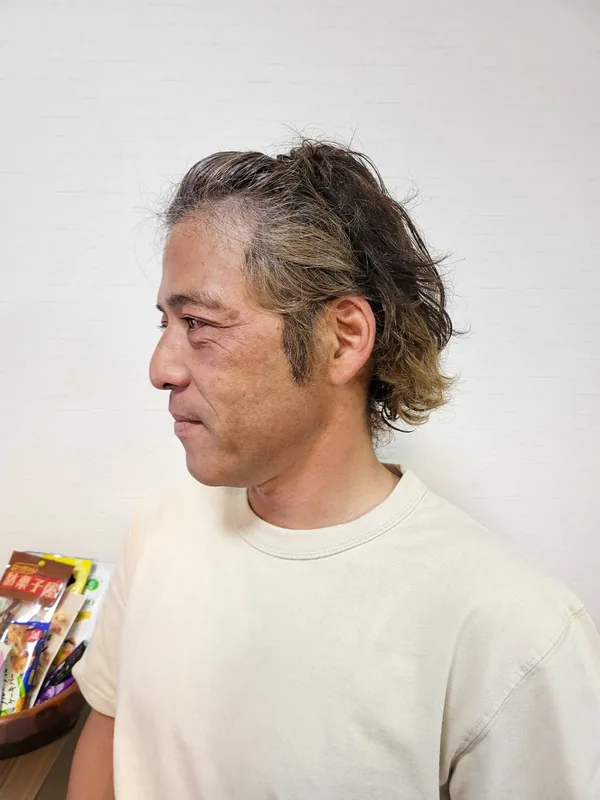
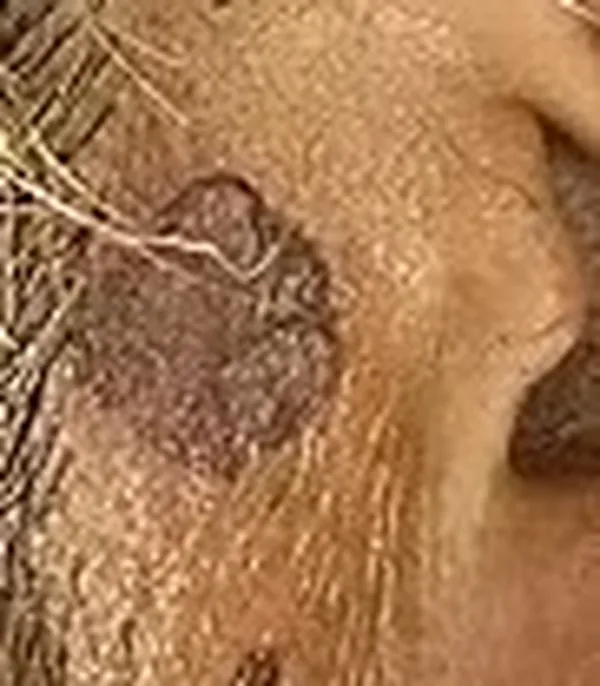
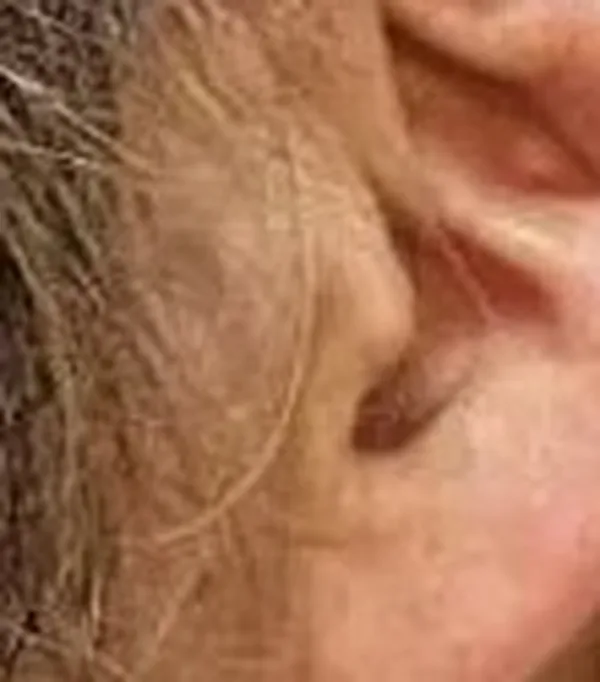
Pigmented spot laser · cheek and in front of the ear
Treatment: pigmented spot laser.
Cost: charged per spot — ¥3,500 for a spot up to 1cm across, ¥5,000 up to 2cm, or the ¥15,000 unlimited plan for spots up to 1cm. Prices include tax. Self-pay — Japanese national health insurance does not apply.
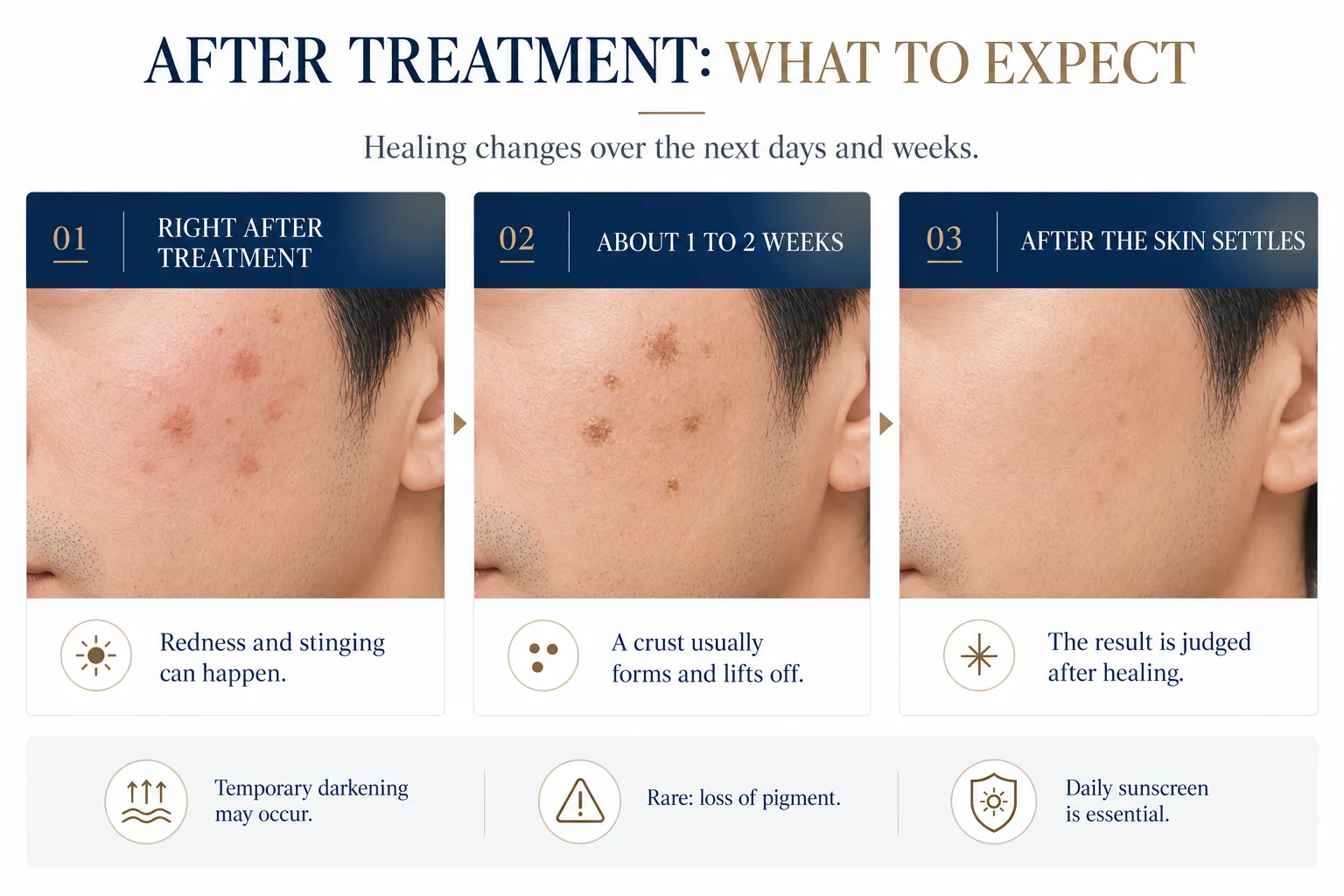
Main risks and side effects: redness and stinging after treatment; a crust over the treated spot that lifts within about one to two weeks; temporary darkening; in rare cases a patch of skin that loses pigment. Treatment is not carried out on sun-tanned skin.
Each pair shows the same patient, photographed before and after treatment. It is not a guarantee of any result — how much a spot fades, and how quickly, differs from person to person, and not every kind of pigmentation responds to laser.
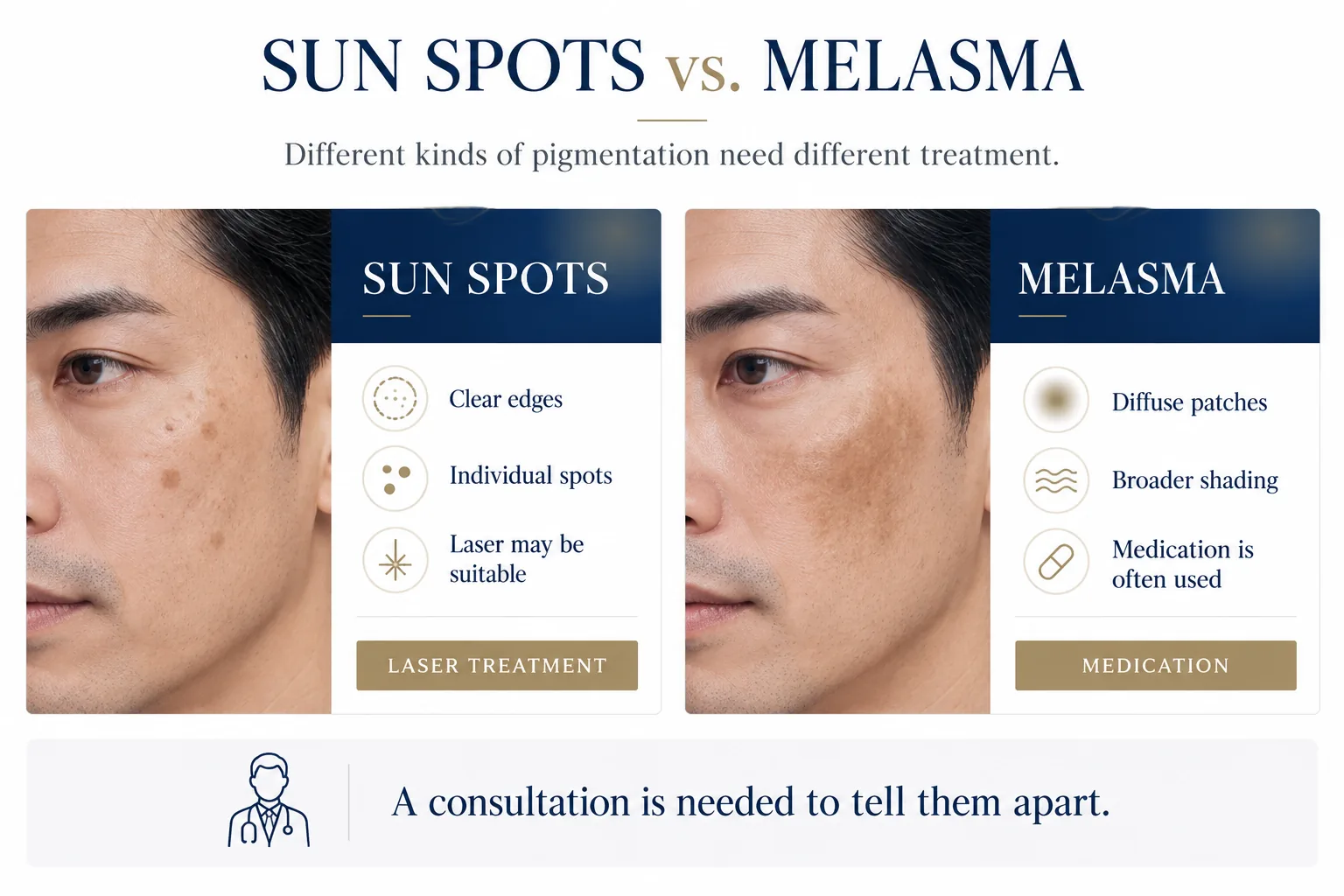
Melasma is a different kind of pigmentation from a sun spot, and it is not what this laser is for. It tends to show as a broader, less clearly bordered shading rather than a single mark you can point to — but telling the two apart is what the consultation is for, not something to settle in front of a mirror.
Where it is melasma, the route is medication, and there are two parts to it.
Tranexamic acid tablets, ¥2,400 for a month. Tranexamic acid is described as the first-line choice for melasma. Taken by mouth, it suppresses the production of melanin, and an improvement in uneven tone and dullness can be expected. The usual dose is one tablet three times a day after meals, a month’s supply of 90 tablets, and it is prescribed after a consultation. Tranexamic acid is an approved medicine in Japan, but melasma is outside its approved indications; it is used for this purpose as self-pay treatment, at the doctor’s discretion.
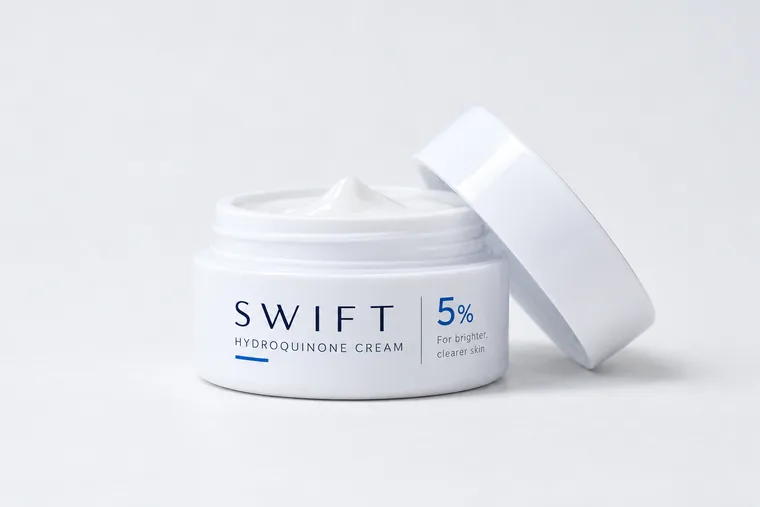
Hydroquinone cream 5%, ¥2,980 for 5g. Applied to the skin, it suppresses the enzyme that makes melanin, and is used for sun spots, freckles, melasma and the pigmentation left behind after inflammation. Tretinoin 0.05% at ¥2,980 works the other way round, turning the skin over so pigment is carried out, and the two are often used together — the pair is ¥5,280. Both can be prescribed through an online consultation, with no consultation fee and ¥550 postage, so a first order comes to about ¥3,530. Details are on the medication list.
Laser and creams are not competing options so much as tools for different problems. Which one applies depends on the kind of pigmentation and the state of your skin, and that is what the consultation is for. For ZO Skin Health products used alongside either route, see medical skincare.
You can be seen here without speaking Japanese. Consultations are handled with a translation app and written notes rather than by an English-speaking doctor, which works well for treatments where the decision is straightforward — repeat prescriptions, testing, hair removal — and is slower where you have a complicated history to explain. Treatment information, pricing and access details on these pages are in English. The booking system and the pre-visit questionnaire are in Japanese, so message us on LINE beforehand if you would like help completing them.
At this clinic, ¥3,500 for a spot up to 1cm across and ¥5,000 for a spot up to 2cm. An unlimited plan covering spots up to 1cm is ¥15,000. Prices include consumption tax. Everything here is self-pay, so Japanese national health insurance does not apply and no insurance card is needed.
Melasma is treated with medication rather than with this laser. Tranexamic acid tablets are ¥2,400 for a month’s supply of 90 tablets and are described as the first-line choice. A hydroquinone 5% cream is ¥2,980 for 5g, and tretinoin 0.05% is ¥2,980, with the pair at ¥5,280 — consultation fee ¥0, postage ¥550. Hydroquinone and tretinoin are not approved in Japan; see the disclosure above.
No. Mole removal is not offered here. This page covers pigmented spots — the flat brown marks left by ultraviolet exposure — and melasma. A raised or pigmented mole needs assessing on its own terms, and a dermatology or surgical clinic is the right place for it.
Not at the strength used in treatment. The hydroquinone 5% cream prescribed here is stronger than what is permitted in over-the-counter cosmetics, and is used under a doctor’s management. It is prescribed after a consultation, which can be done online, and it is not approved as a pharmaceutical in Japan.
One visit is often enough for a single spot. A crust forms and lifts within about one to two weeks, and the result is judged after that, once the skin underneath has settled. Some kinds of pigmentation need more than one session, and the doctor will tell you which you have before starting.
Yes to the first, and no to the second. Consultations are handled with a translation app and written notes rather than by an English-speaking doctor, which works well for a treatment where the decision is straightforward. No insurance card is needed because all treatment here is self-pay. Payment is by cash, credit card including UnionPay, or QR payment including WeChat Pay and Alipay.
From ¥3,500 a spot, and treatment at a first visit is possible. One minute from Shimbashi Station, a short walk from Ginza. Male patients only, and consultations are held in a private room.
