
Articles
What is Mounjaro? Effects, use, side effects and approved indications
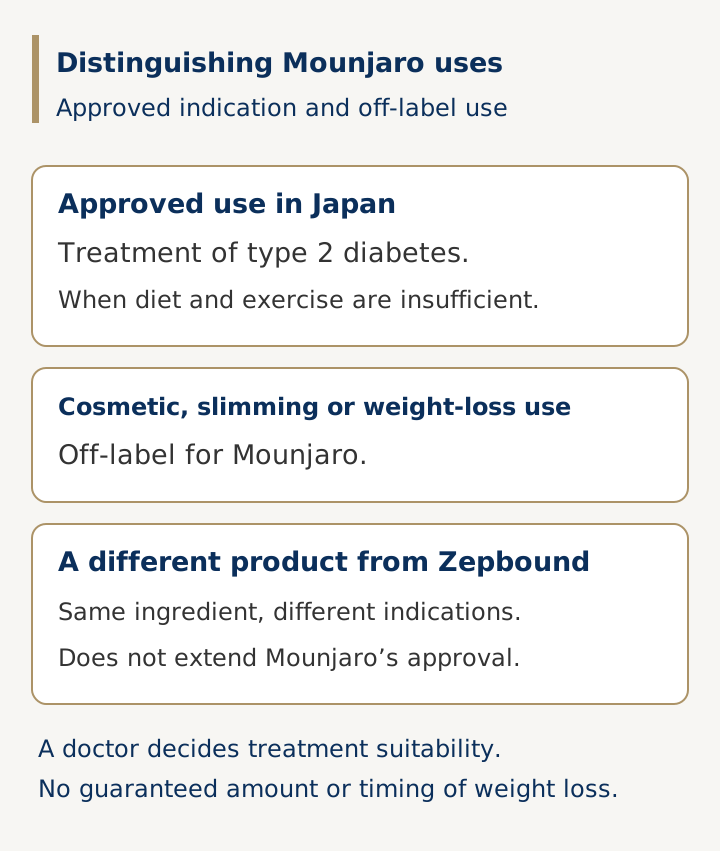
Mounjaro is a once-weekly injection containing tirzepatide. Its approved indication in Japan is type 2 diabetes. Cosmetic, slimming or weight-loss use is off-label. The regulatory status and matters to review during treatment depend on the purpose of use.
This article explains its mechanism, research on effects, differences in indications, reassessment, administration, side effects and storage. For clinic fees and consultations, see Mounjaro online consultation and prescription fees.
Medical reviewer: Masashi Morita, MD (Board-certified specialist and supervising physician, Japanese Urological Association / Board-certified specialist, Japan Endocrine Society / Doctor of Medical Science)
Mounjaro is a once-weekly injection containing tirzepatide. In Japan, it is approved for type 2 diabetes; cosmetic or weight-loss use is off-label. Review administration, other medicines and your health with a doctor, and follow the storage conditions.
- Active ingredient
- Tirzepatide
- Dosage form
- Injection
- Approved indication in Japan
- Type 2 diabetes
- Cosmetic or weight-loss use
- Off-label
- Frequency
- Once weekly; follow your doctor’s prescribed dose
- Storage
- 2–8°C, protected from light; do not freeze
How Mounjaro works and its approved use
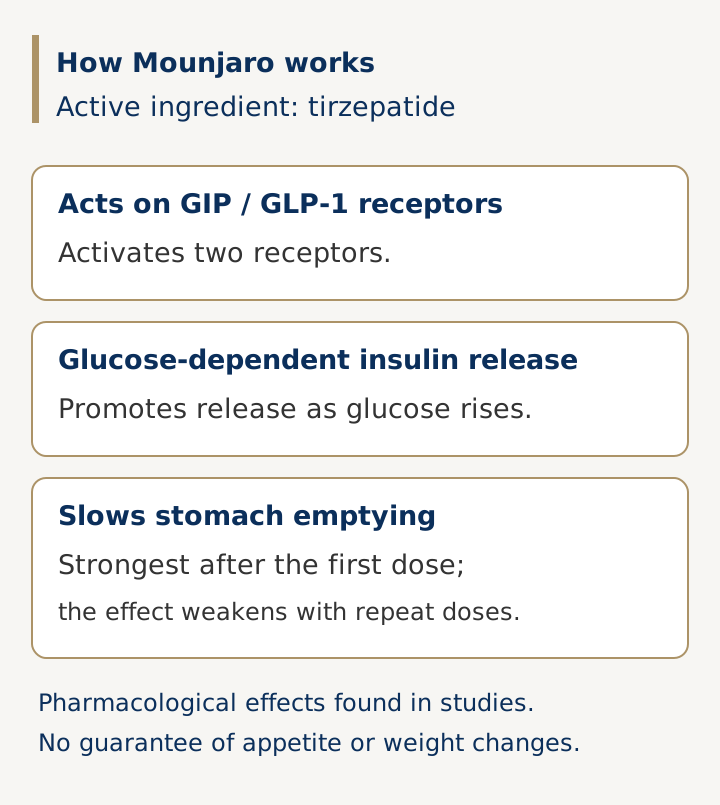
Mounjaro acts on two receptors, GIP and GLP-1. It is used for type 2 diabetes when diet and exercise alone have not provided sufficient benefit. Do not replace insulin with it on your own. Japanese prescribing information §§4, 5, 8 and 18
Effects on blood glucose and stomach emptying
Stimulating GIP and GLP-1 receptors promotes insulin secretion in response to blood glucose. In studies of non-Japanese patients with type 2 diabetes, fasting and post-meal glucose declined more than with placebo, and changes were also observed in secretion of glucagon, a hormone that raises blood glucose. Simply describing the medicine as “burning fat” does not explain its action. Prescribing information §§18.1 and 18.2.2–18.2.4
Delayed emptying of stomach contents has also been reported. This effect is greatest after the first dose and diminishes with repeated administration. These are pharmacological effects observed in research; they do not directly predict any individual’s appetite or weight change. Studies of glucose control must also be distinguished from assessments of efficacy and safety for cosmetic or weight-loss purposes. Prescribing information §18.2.6
Weight-loss use is off-label
Japan’s Ministry of Health, Labour and Welfare warns that efficacy and safety have not been established for cosmetic or slimming use of Mounjaro. Even when consulting a doctor, it is important to understand the off-label status and possible harm, as well as hoped-for changes. No individual can be guaranteed a particular loss in kilograms or a timeline. Ministry warning
How effects on body weight have been studied
Tirzepatide has been studied in adults with obesity or weight-related health problems. In the representative SURMOUNT-1 trial, 2,539 adults without diabetes received once-weekly tirzepatide or placebo, and weight change was compared over 72 weeks. Participants had a BMI of at least 30, or at least 27 with a weight-related complication. Both groups also followed a reduced-calorie diet and increased physical activity. Study conditions reported by the trial sponsor
| Assigned trial dose | Mean percentage weight change at week 72 |
|---|---|
| Tirzepatide 5mg | −15.0% |
| Tirzepatide 10mg | −19.5% |
| Tirzepatide 15mg | −20.9% |
| Placebo | −3.1% |
These numbers are percentages of starting body weight, not kilograms lost. Mean baseline BMI was 38.0; the trial did not broadly enrol anyone wanting to lose a little weight. Adverse events, including gastrointestinal symptoms, were reported. Authors’ abstract of the original SURMOUNT-1 publication
These results cannot be directly applied to the changes experienced by each person using any strength available at our clinic. Nor do they change Mounjaro’s approval status in Japan for cosmetic or weight-loss use. Consider the study population, dose and duration together.
When to reassess treatment and what to check while continuing
Check not only weight, but also whether you can eat and drink and whether side effects persist. For the approved treatment of type 2 diabetes, the prescribing information calls for regular blood and urine glucose checks and consideration of a treatment change if the effect is insufficient after 3–4 months. This is not a promise that cosmetic use will cause weight loss after 3–4 months.
If changes are limited or nausea or other symptoms are troublesome, tell your doctor about your use and health rather than increasing the dose yourself. Dose increases depend on side effects and excessive weight loss as well as treatment effects. Prescribing information §§7.3, 7.4, 8.2 and 8.9
Considering diet and exercise
Diet and exercise are fundamental to type 2 diabetes treatment. Conversely, very low food intake, intense exercise and excessive alcohol consumption are associated with a risk of low blood glucose. Do not keep skipping meals simply because your appetite has decreased; discuss difficulty eating during your consultation. Prescribing information §§5 and 9.1.3
Weight after stopping
SURMOUNT-4 enrolled adults with obesity or overweight with a weight-related complication. Following a lead-in period with dose escalation to 10mg or 15mg, participants switched to placebo regained weight. This shows that weight loss is not necessarily maintained once achieved. It does not directly describe outcomes with our clinic’s doses or any individual’s course after stopping. Discuss future weight management with your doctor whether continuing or stopping. Authors’ abstract of the original SURMOUNT-4 publication
How it differs from Zepbound
Zepbound also contains tirzepatide but is a different product from Mounjaro. Zepbound is approved in Japan for obesity that meets specified conditions. This does not mean Mounjaro has been approved for cosmetic or weight-loss purposes. Do not use medicines containing the same active ingredient together. PMDA: Japanese Zepbound prescribing information / Mounjaro prescribing information §8.15
How the injection is used
For the approved treatment of type 2 diabetes, dosing starts at 2.5mg once weekly and increases to 5mg after 4 weeks. Further increases depend on treatment effects and health. This is not a uniform dosing regimen for cosmetic use. Follow your prescription and do not change the amount or interval on your own.
Before self-injection, receive instructions from your healthcare provider on using and disposing of the device, and confirm the steps. Prescribing information §§6, 7 and 8.14
Injection sites and checks before use
The medicine is injected under the skin of the abdomen, thigh or upper arm. Rotate the injection location even within the same body area. Before use, check for device damage, discoloured solution or floating particles. If anything is abnormal, do not use it without checking with a healthcare professional or pharmacist. Follow the product instructions and the training provided by your healthcare provider for detailed handling. Prescribing information §§8.14 and 14
If you miss an injection
The prescribing information states that if at least 72 hours remain before the next scheduled dose, administer the missed dose when remembered. If fewer than 72 hours remain, skip that dose and administer the next dose on its scheduled day. Changing the weekly day also requires at least 72 hours since the previous injection. If you are unsure whether you injected a dose or are uncertain about timing, check with your healthcare provider before taking another injection. Prescribing information §7.2
Side effects and symptoms requiring medical attention
Gastrointestinal symptoms such as nausea, vomiting, diarrhoea, constipation and abdominal pain may occur. Contact the prescribing healthcare provider if symptoms persist or you cannot eat or drink. Dehydration associated with diarrhoea or vomiting also needs attention.
Serious side effects include low blood glucose, acute pancreatitis, biliary disorders, anaphylaxis or angioedema, and ileus including intestinal obstruction. Stop using the medicine and promptly seek medical assessment if you develop persistent severe abdominal pain with vomiting, severe constipation with abdominal swelling, or similar symptoms described here. Do not continue on the assumption that symptoms will resolve on their own. Prescribing information §§8 and 11
Symptoms of low blood glucose and how to respond
Cold sweats, palpitations, trembling hands, intense hunger and dizziness can be symptoms of low blood glucose. The prescribing information advises measures such as eating carbohydrate-containing food when symptoms occur. However, glucose is needed if an alpha-glucosidase inhibitor is also being used. Before starting treatment, ask your doctor how to recognise low blood glucose and how to respond appropriately for your other medicines. Prescribing information §§8.4 and 11.1.1
What to tell your doctor before the consultation
There are conditions in which the medicine must not be used, including type 1 diabetes and diabetic ketoacidosis. Tell your doctor about previous drug allergies, pancreatitis, serious gastrointestinal disease, intestinal obstruction, abdominal surgery and diabetic retinopathy. If surgery or anaesthesia is planned, also tell the treating doctor that you are using this medicine.
Diabetes medicines such as insulin affect the risk of low blood glucose. Oral contraceptives and warfarin also need to be reviewed. Report all medicines you use, including non-prescription products. Prescribing information §§2, 9 and 10
Pregnancy and breastfeeding
Do not administer the medicine to people who are pregnant or may be pregnant. If pregnancy is possible, discuss contraception during treatment and for 1 month after the last dose with your doctor. Effects on oral contraceptives also require attention. During breastfeeding, a decision must take account of the benefits of treatment and breastfeeding. Prescribing information §§9.4–9.6 and 10
Storage
Store at 2–8°C, protected from light, and do not freeze. Do not use medicine that has been frozen. Room-temperature storage is permitted in its outer carton at no more than 30°C, with use within 21 days. If you do not know the storage temperature or duration, check with your healthcare provider or pharmacist before use. Prescribing information §20
Before an online consultation
Mounjaro is a prescription medicine. An online consultation is different from ordinary online shopping completed by placing an order: a doctor reviews your medical history, medicines and treatment purpose before deciding whether to prescribe. Prescribing information: regulatory classification
Our clinic offers online consultations, but booking does not guarantee a prescription. See the Mounjaro online consultation page for booking, questionnaire, consultation and delivery information.
When comparing costs, distinguish the price for one injection from four, the strength, and shipping charges. At your consultation, also check whether self-injection training is available, where to seek advice if your health changes during use, and how to store the medicine after delivery.
Consulting our clinic
Our medicine prices for 4 injections are JPY 29,800 for 2.5mg, JPY 49,800 for 5mg and JPY 74,800 for 7.5mg, all including tax. Refrigerated delivery costs JPY 1,050. The prescribed dose is determined at the consultation.
Mounjaro care at our clinic is self-pay treatment. Fees, delivery and booking information are provided on the Mounjaro online consultation and prescription fees page. A requested medicine may not be prescribed depending on the assessment.
Japan’s Ministry of Health, Labour and Welfare states that harm caused by off-label use for cosmetic or slimming purposes is highly likely to be ineligible for benefits under the Relief System for Adverse Drug Reactions. Ministry notice on the relief system
Key points for safer use
- Confirm that cosmetic or weight-loss use is off-label.
- Do not change the injection dose, interval or other medicines on your own.
- Tell your doctor about possible pregnancy, your medical history and current medicines.
- Stop use and promptly seek medical attention for symptoms described above, such as persistent severe abdominal pain.
- Follow storage conditions and confirm self-injection and device disposal procedures.
Frequently asked questions
Is Mounjaro an unapproved medicine in Japan?
The medicine itself is approved in Japan for type 2 diabetes. Cosmetic or weight-loss use is outside its approved indication. Distinguish approval of the medicine from approval for the intended use.
Will increasing the injection dose make it work faster?
Do not increase the dose yourself. A doctor adjusts it after reviewing your health, treatment effects and side effects. Neither the amount nor speed of weight loss can be guaranteed.
Is it unusable as soon as it leaves the refrigerator?
There are conditions permitting room-temperature storage: no more than 30°C, in the outer carton, and used within 21 days. If it has frozen, been exposed to heat, or has an unclear storage history, ask before using it.
When do effects start?
This depends on the treatment purpose, dose and health. The timing of a high blood concentration cannot be equated with when appetite or weight will change. The research results above are averages for specific populations and periods, not a day-by-day prediction for an individual after starting. Review changes and your health with your doctor.
Can I buy it online without a consultation?
At our clinic, a doctor determines whether a prescription is appropriate. Unlike ordinary online shopping, selecting a preferred strength alone is not enough to purchase it. See the online consultation and prescription fees information for the process and costs.
Medical reviewer of this article
Masashi Morita, MD (森田 將)
Medical reviewer, Shinbashi Ginza Swift Clinic
- Board-certified specialist and supervising physician, Japanese Urological Association
- Board-certified specialist, Japan Endocrine Society
- Doctor of Medical Science, Showa University
- Graduate, Showa University School of Medicine
References
- Jastreboff AM, et al. SURMOUNT-1 (N Engl J Med. 2022;387:205–216)
- Aronne LJ, et al. SURMOUNT-4 (JAMA. 2024;331:38–48)
- Japanese Mounjaro prescribing information (11th edition, September 2026)
- PMDA: Japanese Zepbound prescribing information (6th edition, September 2026)
- Japan’s Ministry of Health, Labour and Welfare: harm associated with cosmetic or slimming use