
Articles
What is tranexamic acid? Melasma, side effects, how to take it and treatment reviews
Tranexamic acid is an ingredient used to treat certain symptoms associated with bleeding and inflammation. It is contained in the prescription medicine Transamin. Although it is sometimes used for melasma in cosmetic medicine, melasma is not among the approved indications for prescription Transamin in Japan.
This article explains how to assess its effects on melasma, how it differs from OTC medicines, how to take it, possible side effects and care during treatment. For our clinic's prices and consultations, see tranexamic acid online consultations and prescription prices.
Medical reviewer: Masashi Morita, MD (Board-certified specialist and supervising physician, Japanese Urological Association / Board-certified specialist, Japan Endocrine Society / Doctor of Medical Science)
Tranexamic acid inhibits plasmin activity. Using prescription Transamin for melasma is off-label in Japan; its formulation and directions differ from OTC melasma medicines. Discuss blood clots, kidney function and other medicines, and follow the instructions for your prescribed product.
- Ingredient
- Tranexamic acid
- Product at our clinic
- Transamin tablets
- Use for melasma
- Off-label for prescription Transamin in Japan
- Dose
- Check the strength, dispensing label and doctor's instructions
- Precautions
- History of blood clots, kidney function and other medicines
- Storage
- Room temperature; follow the packaging and dispensing label
How tranexamic acid works and its approved uses
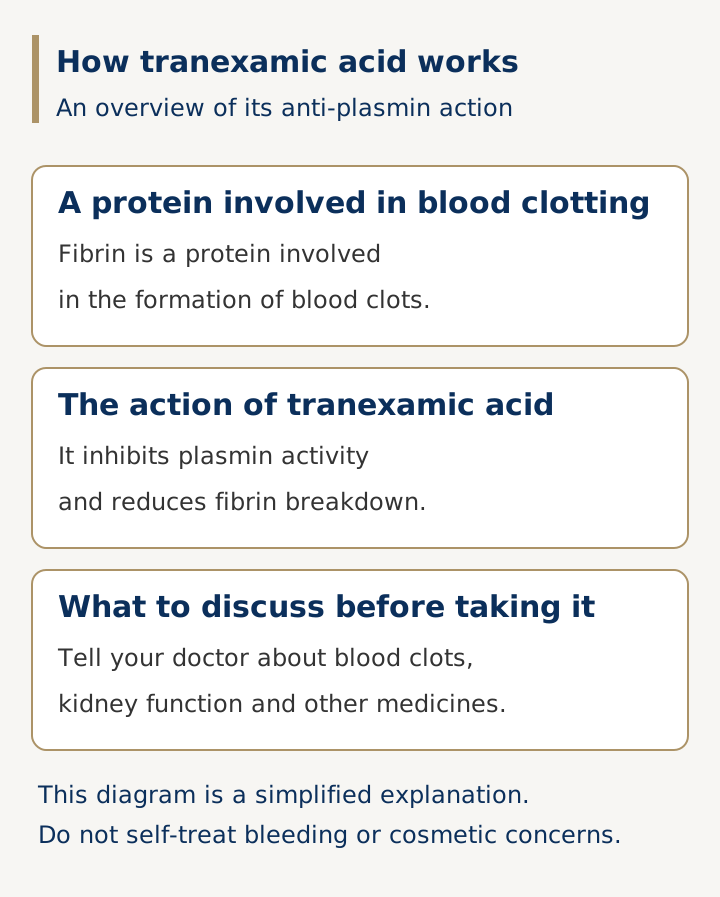
Tranexamic acid inhibits plasmin activity and reduces the breakdown of fibrin, which is involved in blood clotting. Transamin is indicated for certain bleeding conditions, symptoms associated with conditions such as eczema, symptoms of tonsillitis and pharyngolaryngitis, and stomatitis. This explanation is not an instruction to self-treat bleeding or a sore throat without establishing the cause. PMDA: Transamin prescribing information, sections 4 and 18
Prescription Transamin for melasma is an off-label use
Prescribing Transamin for melasma falls outside its approved indications in Japan. At our clinic, the doctor assesses your skin and medical history before deciding. Not every area of pigmentation that you regard as a “dark spot” is melasma, so treatment should not be chosen by a medicine's name alone.
How have its effects on melasma been studied?
Clinical studies have examined its use for melasma. A double-blind randomized controlled trial at a single center outside Japan enrolled 44 people with moderate-to-severe melasma; 39 completed the trial. Both groups used sunscreen and took either tranexamic acid or placebo for 3 months. The tranexamic acid group showed a greater improvement in the modified Melasma Area and Severity Index (mMASI). Del Rosario et al.: randomized trial in melasma
However, this was a small study, and most participants were Hispanic women. The findings cannot be assumed to apply to every type of pigmentation or every person, and the study was not large enough to adequately assess rare adverse events. These results do not mean that the treatment is approved for melasma in Japan or that the same effects have been established for the product and dose used at our clinic. They should inform a discussion with a doctor about expectations and risks after a skin assessment and review of your medical history.
How is it different from OTC melasma medicines?
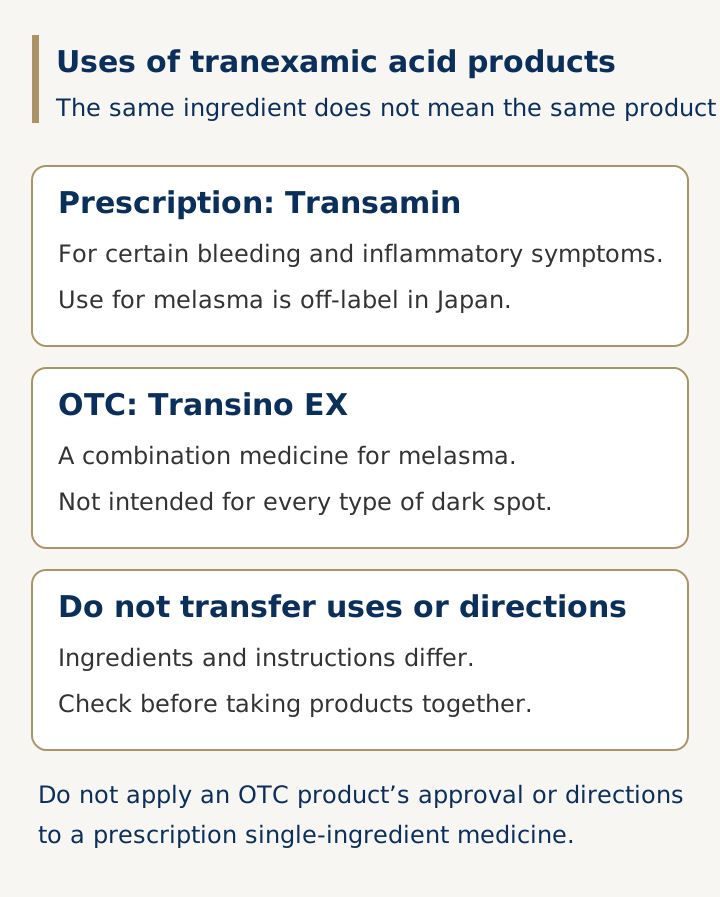
Transino EX is an OTC combination medicine containing tranexamic acid that is approved in Japan for melasma, a specific type of pigmentation. However, its combination of ingredients and directions differ from prescription Transamin. The indications or treatment duration for an OTC product cannot simply be applied to a prescription single-ingredient medicine. Manufacturer: Transino EX package insert / Product information
Distinguishing melasma from other pigmentation
Treatment choices depend on whether uneven facial pigmentation is melasma or another type of dark spot. Even when research on tranexamic acid concerns melasma, the same findings cannot automatically be applied to sun spots, freckles or acne marks.
At your consultation, explain when you first noticed the changes, where they are, how they have developed, and any medicines or procedures you have tried. Photographs or video may not provide enough information, and an in-person examination may be needed. American Academy of Dermatology: melasma diagnosis and treatment
How to take it: the basics
Check the strength of your prescribed product and follow your doctor's instructions. Different products may contain different amounts of the active ingredient even when described as “one tablet.” Also check your own prescription and dispensing label for how often and when to take it.
Do not treat the dose for an approved indication as a standard dose for melasma, or calculate and increase the number of tablets yourself. Transamin prescribing information, section 6
When should effects be assessed? Reviewing continuation and stopping
Some studies of oral treatment for melasma have compared changes after 3 months. This is a study assessment point, not a recommendation that everyone take the medicine for the same duration or a promise that it will work within that time.
The same trial also followed participants for another 3 months after the tablets were stopped, during which they used sunscreen alone. The degree of improvement changed after treatment ended; once pigmentation lightens, it does not necessarily stay that way indefinitely. Del Rosario et al.: randomized trial
If you cannot tell whether it is working, or want to stop
Review whether to continue with your doctor, considering not only skin changes but also how you feel during treatment and any newly started medicines. If improvement is limited, reassess the diagnosis of melasma and the combination of treatments before increasing the medicine. Even if your skin improves, discuss why treatment should continue and when the next review should take place.
Do not apply the usage period of an OTC melasma medicine directly to prescription Transamin. Avoid assuming that a prescription medicine is “safe for any number of months” or “must always be taken for this exact period”; check the instructions for your own prescription.
Continue sun protection during treatment
Melasma treatment involves protection from sunlight as well as medication. Alongside sunscreen, combine measures such as wearing a hat and seeking shade. Taking tranexamic acid does not replace sunscreen. American Academy of Dermatology: melasma treatment and sun protection
If sunscreen or a topical medicine irritates your skin, consult your doctor instead of forcing yourself to continue using it. Choose care suitable for your skin and review it together with your response to treatment.
Side effects and blood clot precautions
Possible side effects include loss of appetite, nausea, vomiting, diarrhea, heartburn, rash, itching and drowsiness. People receiving hemodialysis require particular attention to seizures, a serious adverse effect.
In people with a blood clot or a risk of thrombosis, the medicine may stabilize a clot. Always tell the doctor if you have previously been diagnosed with cerebral thrombosis, myocardial infarction or thrombophlebitis, or if you have been confined to bed for a prolonged period after surgery. Transamin prescribing information, sections 9 and 11
Symptoms requiring urgent advice about stopping and seeking care
If you suddenly develop difficulty breathing or severe chest pain, or your lips, tongue or throat suddenly swell while taking the medicine, seek emergency care without waiting for a routine online appointment. In Japan, call 119 for an ambulance. These symptoms require urgent assessment for possible blood clots, severe allergy or other causes.
Also seek prompt medical advice if you develop pain, swelling or redness in a limb on one side, or changes in your vision. Tell the clinician the medicine's name and how you have been taking it, and ask what to do about your next dose. NHS: side effects of tranexamic acid and when to seek help
Even if symptoms seem mild, contact the prescriber if a rash, nausea or other symptoms persist. Do not keep taking it while simply putting up with symptoms, or increase the dose yourself.
When it cannot be used, and other medicines
Transamin must not be given to people using thrombin. Combinations with hemocoagulase, batroxobin and coagulation factor preparations also require checking. Tell your doctor if you have reduced kidney function, receive dialysis or have had an allergic reaction to a medicine.
OTC cold medicines, sore-throat medicines and melasma products may also contain tranexamic acid. Share the products you currently use so that overlapping ingredients can be checked. Also tell the doctor about hormonal medicines such as contraceptive pills and obtain an individual assessment. Transamin prescribing information, sections 2, 9 and 10
Use during pregnancy and breastfeeding
The Japanese prescribing information for Transamin states that it should be used during pregnancy only when the therapeutic benefit outweighs the risk. During breastfeeding, a decision also needs to consider the benefits of treatment and breastfeeding. Do not take it for cosmetic purposes on your own; discuss possible pregnancy or breastfeeding with your doctor. Transamin prescribing information, sections 9.5 and 9.6
How it relates to topical medicines, lasers and other treatments
Melasma treatment may combine oral medicine with topical medicines such as hydroquinone or procedures chosen for the skin's condition. Oral and topical medicines differ in where they are used and their precautions, so neither can be described as better for everyone. See hydroquinone: effects, use and precautions (Japanese), and tell the doctor which medicines you currently use.
The suitability of laser or light-based treatment needs to be assessed in light of your skin condition and other treatments. Taking tranexamic acid does not mean that every procedure is suitable for you. If you are planning a procedure, tell the treating doctor the names of your oral and topical medicines and how you use them, and confirm whether they can be combined and how to use them before and after the procedure. American Academy of Dermatology: medicines and procedures for melasma
Storage
Transamin is stored at room temperature. Follow the instructions on the dispensing label or packaging provided. Remove tablets from blister packaging before taking them; do not swallow the packaging. Transamin prescribing information: storage and section 14
If you notice a change in appearance or damaged packaging, do not judge quality or whether it can be used by color alone. Ask the medical institution or pharmacy that supplied the medicine.
Consulting our clinic about a prescription
At our clinic, the medicine price for Transamin tablets is JPY 2,400 for 90 tablets, including tax. Confirm the product strength and how to take it in the prescribing explanation and on your dispensing label.
Our clinic offers Transamin tablets as an oral medicine used in cosmetic care. Prices, pre-prescription checks and booking information are available on tranexamic acid online consultations and prescription prices. Confirm that use for melasma is off-label and discuss other medicines and blood clot risks with the doctor.
Key points for safer use
- Distinguish melasma from other pigmentation and understand the explanation of off-label use.
- Check the product strength and prescription instructions; do not increase the dose yourself.
- Tell the doctor about blood clots, kidney function, pregnancy and breastfeeding.
- Share all other medicines, including OTC products, so overlapping ingredients can be checked.
- Continue sun protection and review your skin response and general health with the doctor when deciding whether to continue.
Frequently asked questions
Are Transamin and tranexamic acid the same?
Tranexamic acid is the ingredient name; Transamin is a brand name for a medicine containing it. Products with the same ingredient can still differ in dosage form and strength.
Can I take it with OTC medicines?
Check before taking them together, because ingredients may overlap. Having the OTC package, ingredient label and your medication record available helps with this check.
Can it be used for every type of dark spot or acne mark?
There is no single answer for everyone. Treatment is chosen according to the skin's condition and diagnosis. OTC melasma medicines are not intended for every type of pigmentation either.
I have had a blood clot. Can I take it?
Always tell the doctor before the consultation. People with blood clots or a risk of thrombosis require caution. The doctor will assess your previous diagnosis and current treatment.
Can I increase the dose if I cannot tell whether it is working?
Do not increase it yourself. Discuss with your doctor whether other types of pigmentation are present and review how you take the prescribed medicine and how your skin has changed. A study's assessment period is not necessarily the treatment duration you need.
If I take it, can I stop using sunscreen?
Continue sun protection. Oral treatment does not replace sunscreen. Use sunscreen, hats and other measures suitable for your skin.
Medical reviewer
Dr. Masashi Morita (森田 將; もりた まさし)
Medical reviewer, Shinbashi Ginza Swift Clinic
- Specialist and instructor certified by the Japanese Urological Association
- Specialist certified by the Japan Endocrine Society
- Doctor of Medical Science, Showa University
- Graduate of Showa University School of Medicine
References
- American Academy of Dermatology: Melasma: Diagnosis and treatment
- NHS: Side effects of tranexamic acid
- Del Rosario E, et al. Randomized controlled trial in melasma (J Am Acad Dermatol. 2018;78:363–369)
- PMDA: Transamin prescribing information
- Daiichi Sankyo Healthcare: Transino EX package insert
- Daiichi Sankyo Healthcare: Transino EX product information